
EPF reaction to the 2026 Work Programme Vote
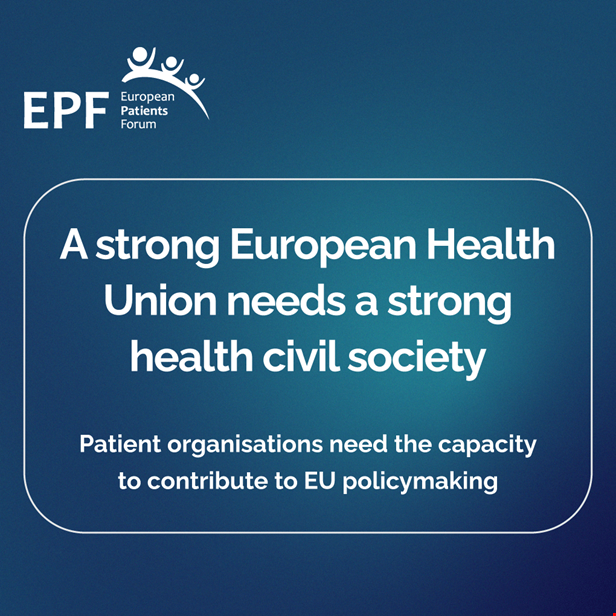
EPF learned that, yesterday (22 July 2026), several Member States either voted against or abstained from voting on the European Commission's proposed 2026 EU4Health Work Programme. As a result, the Commission did not secure the majority required to approve the programme.
We understand that this decision may have been motivated, at least in part, by concerns over the exclusion of operating grants for health and patient organisations from the proposed Work Programme, despite repeated requests from several Member States over recent months to maintain this funding, safeguarding the viability of these organisations.
We are encouraged by this outcome and would like to thank the Member States that clearly defended the need for patient and health civil society organisations to continue their work in a sustainable way. We also extend our sincere thanks to the 70 Members of the European Parliament, from across political groups and countries, who recently called for operating grants to be maintained.
Operating grants provide the organisational capacity that enables patient and health organisations to engage in EU policymaking, contribute expertise, consult their communities, gather evidence, and develop policy recommendations on issues such as access to healthcare, medical devices, health technology assessment, clinical trials and many other public health priorities.
At EPF, these grants underpin our ability to bring together the collective voice of patients from across Europe and ensure that patients’ independent perspectives are reflected in European health policy.
They support the day-to-day work that most often goes unseen: facilitating patient input into EU Health Technology Assessments (HTA), contributing to the European Medicines Agency's regulatory work, producing evidence and policy analysis, consulting our membership and informing stronger, more patient-centred health systems.
This outcome is a positive signal that there is a growing recognition meaningful patient participation requires stable, long-term support for the organisations that represent patients and contribute to policymaking in the public interest.
The European Union cannot aspire to strengthen dialogue with civil society through its forthcoming Civil Society Strategy while at the same time withdrawing the structural support that enables patient and health organisations to play their role. At a time when democratic values and civic space are increasingly under pressure, supporting an independent health civil society is an investment in better policymaking, stronger democracy and better public health.
EPF remains unwavrereing in its commitment to working constructively with the European Commission, Member States and the European Parliament to ensure that the final EU4Health Work Programme includes sustainable support for patient and health organisations, allowing them to continue contributing to European health policy and representing the interests of patients across Europe.